
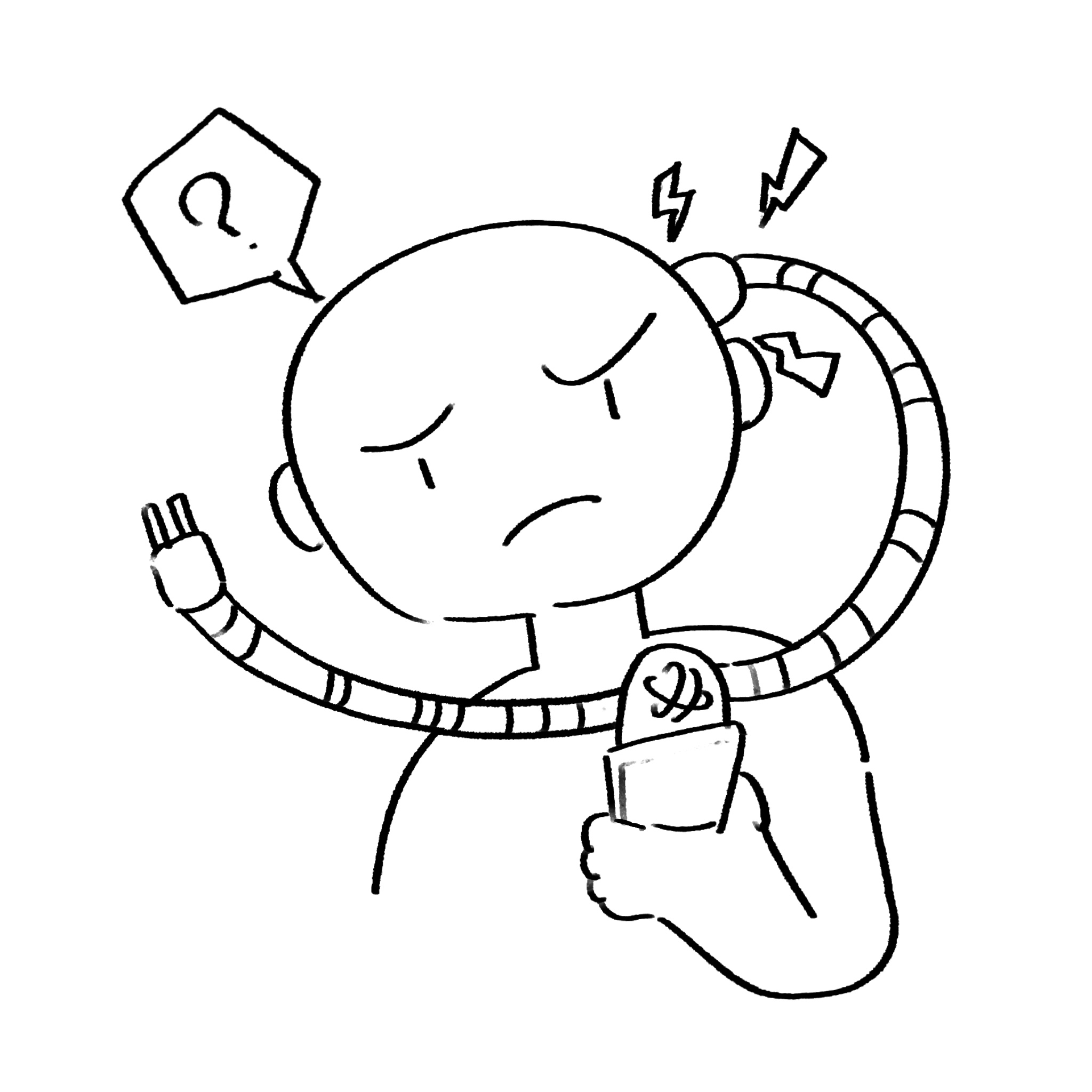
The usage of Artificial Intelligence (AI) has become so common nowadays with the widespread adoption of the technology. It has literally infiltrated our daily lives: from internet searches, answering queries, and helping with chores, to polishing writing and even arguing with other netizens online.
However, this technology is not without its problems. Seeing how people use it to prove their statements worries me. One of the big issues with AI is how it tends to “hallucinate.” These models can make up “theories” or adapt themselves to the arguments of the users when not properly supervised. This means that even if your argument is wrong, the AI model can spin the argument to your liking. It becomes extremely dangerous when you use statements from AI without filtering.
This gives rise to another issue. Most recent GenAI models were made and trained by Western companies. Even though they apply worldwide data for model training and tuning, we are unsure if the trained models reflect the views of the underrepresented, such as those in Asia or the Middle East. Overreliance on these models may eventually lead to what we call “Identity Dilution.”
One aspect is within the individual, where overusage of GenAI can lead to a dilution of self-identity and creativeness (Walczak & Cellary, 2023). The other dilution is cultural; the “Western Gaze” discusses how a Western point of view is superimposed on non-Western generated content (Kotliar, 2020). Prolonged use of this non-representative context may cause “representational harms” to minor cultures. Eventually, bigger tech players in the industry and countries are creating power and influence through digital neocolonialization (Nyaaba et al., 2024).
It is inevitable that GenAI will enter our daily routines. It really comes down to how we are going to use this technology. We need to be critical of what is given and generated by the model, and scrutinize whatever content we see online. Who knows whether the content is generated? In an era where AI is slowly taking power, it is also important to really look into and strengthen our identity, whether it is individual or the whole community.
Cheers,
Jon
References
Kotliar, D. M. 2020. Data orientalism: on the algorithmic construction of the non-Western other. Theory and Society, 49(5): 919–939.
Nyaaba, M., Wright, A., & Choi, G. L. (2024). Generative AI and power imbalances in Global Education: Frameworks for Bias Mitigation. arXiv (Cornell University). https://doi.org/10.48550/arxiv.2406.02966
Walczak, K., & Cellary, W. (2023). Challenges for higher education in the era of widespread access to generative AI. Economics and Business Review/the Poznań University of Economics Review, 9(2). https://doi.org/10.18559/ebr.2023.2.743
Leave a Reply